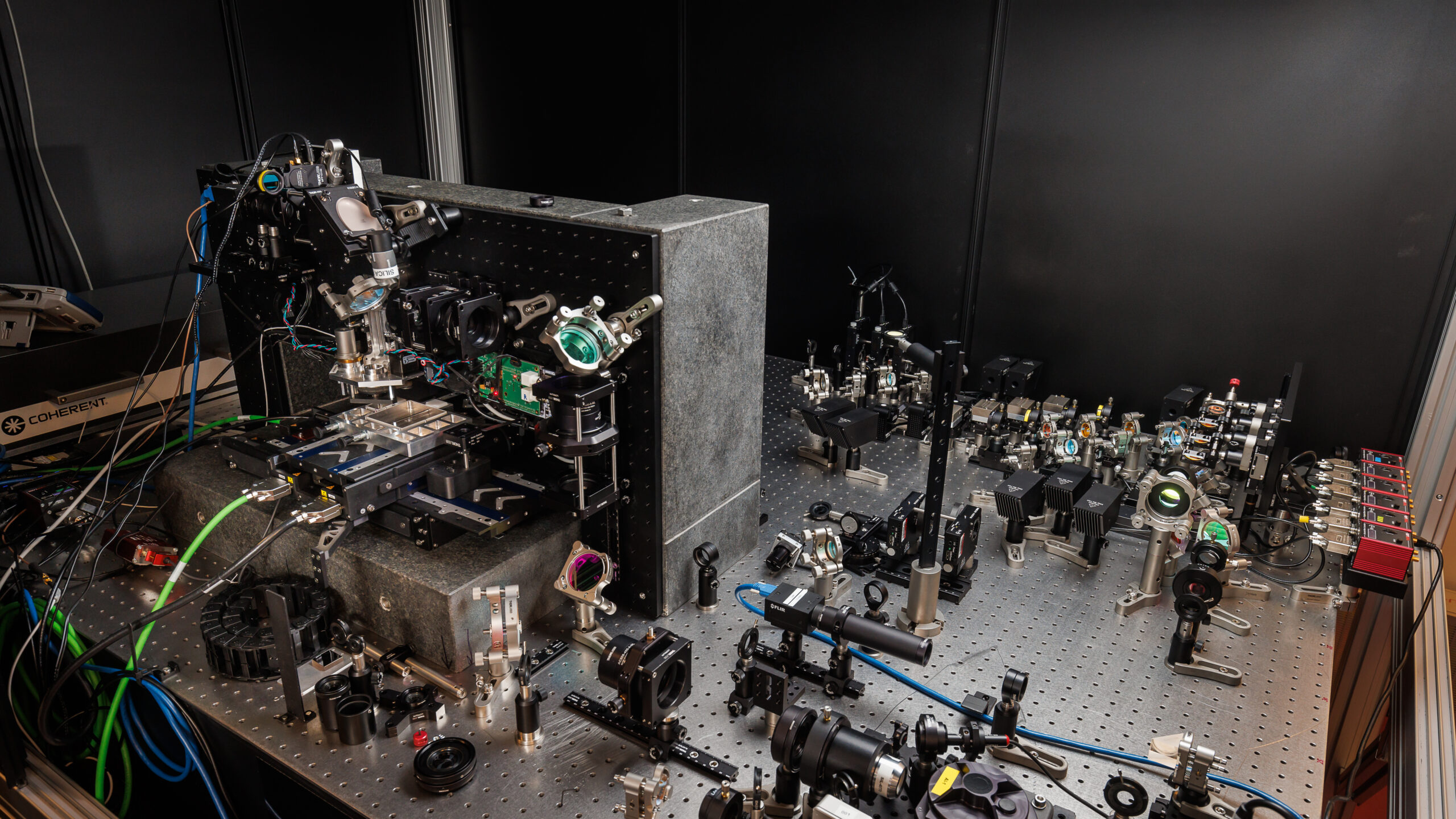
To read the data back, there are several options. We’ve already had great success using lasers to read data from optical disks, albeit slowly. But anything that can pick up the small features etched into the glass could conceivably work.
With the above considerations in mind, everything was in place on a theoretical level for Project Silica. The big question is how to put them together into a functional system. Microsoft decided that, just to be cautious, it would answer that question twice.
A real-world system
The difference between these two answers comes down to how an individual unit of data (called a voxel) is written to the glass. One type of voxel they tried was based on birefringence, where refraction of photons depends on their polarization. It’s possible to etch voxels into glass to create birefringence using polarized laser light, producing features smaller than the diffraction limit. In practice, this involved using one laser pulse to create an oval-shaped void, followed by a second, polarized pulse to induce birefringence. The identity of a voxel is based on the orientation of the oval; since we can resolve multiple orientations, it’s possible to save more than one bit in each voxel.
The alternative approach involves changing the magnitude of refractive effects by varying the amount of energy in the laser pulse. Again, it’s possible to discern more than two states in these voxels, allowing multiple data bits to be stored in each voxel.
Credit:
Microsoft Research
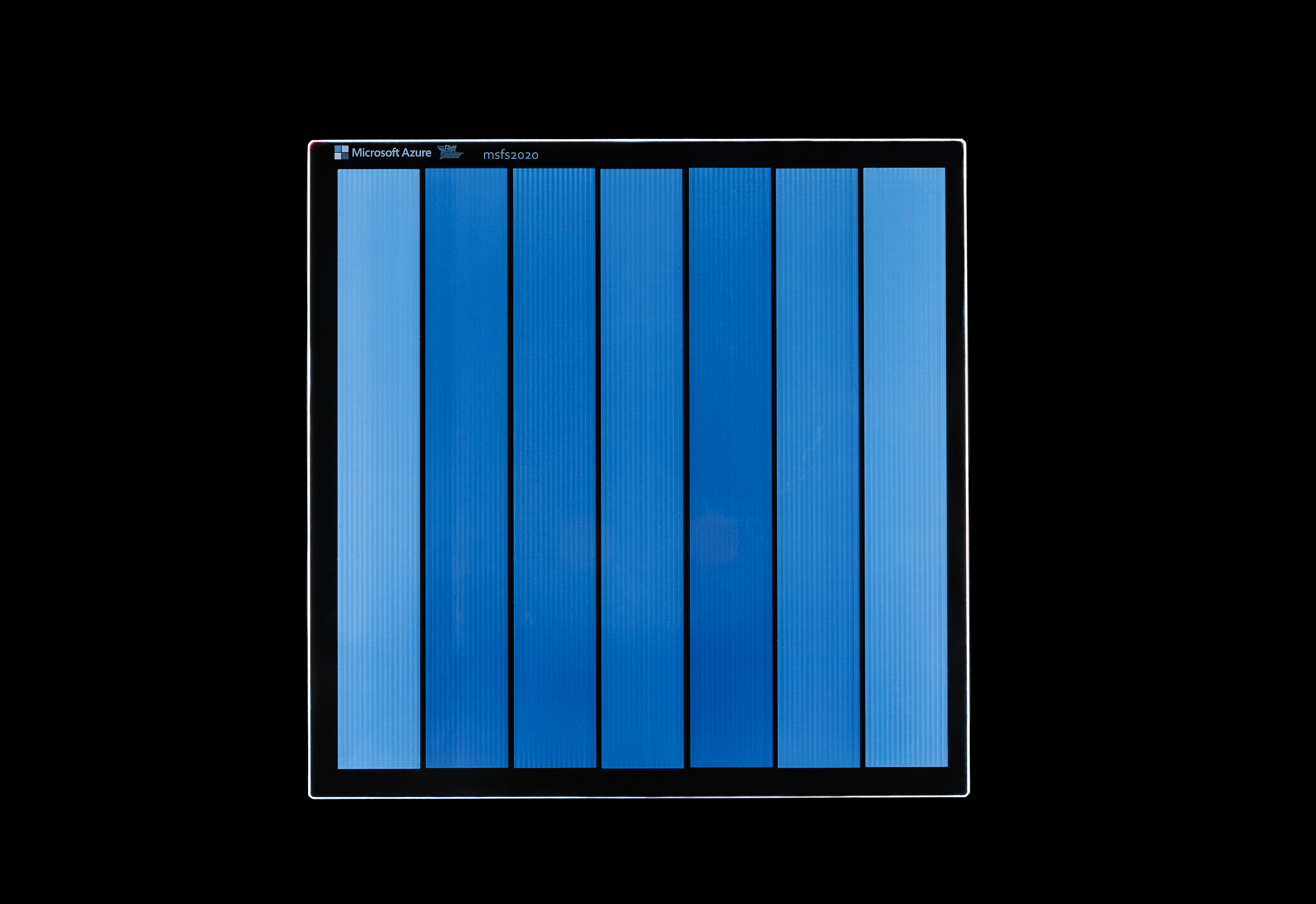
The map data from Microsoft Flight Simulator etched onto the Silica storage medium.
Credit:
Microsoft Research
Reading these in Silica involves using a microscope that can pick up differences in refractive index. (For microscopy geeks, this is a way of saying “they used phase contrast microscopy.”) The microscopy sets the limits on how many layers of voxels can be placed in a single piece of glass. During etching, the layers were separated by enough distance so only a single layer would be in the microscope’s plane of focus at a time. The etching process also incorporates symbols that allow the automated microscope system to position the lens above specific points on the glass. From there, the system slowly changes its focal plane, moving through the stack and capturing images that include different layers of voxels.
Source link